Game On! Simulations and Practice Trading 🎮
Game On! Simulations and Practice Trading 🎮
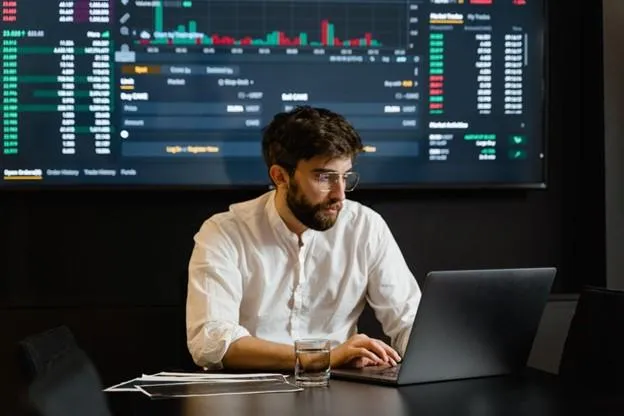
Alright, listen up! You’ve read all the books, watched a ton of YouTube videos, and you’re feeling hyped. You’re ready to jump into the world of day trading and make some money, right? 💰 Hold on there, turbo. Before you put a single dollar of your hard-earned cash on the line, let's talk about the most important thing you can do: practice trading. Think of it like a video game. You don't jump straight into the final boss battle on 'Hard' mode, do you? No! You start with the tutorial, you play a few practice rounds, and you get a feel for the controls. Trading is no different. It’s all about getting your game face on before the real match starts. And the best way to do that? With a trading simulator, often called 'paper trading'. 📜
So, what exactly is paper trading? It's basically a pretend trading account where you use fake money to make real trades on real-time market data. The prices are the same, the charts are the same, and the news is the same. The only difference is that the money isn't real. This is your chance to mess up without losing your shirt. You can try out different strategies, see what works and what doesn't, and learn the software without the fear of hitting the wrong button and accidentally buying a million dollars worth of a company you’ve never heard of. Trust me, it happens. A lot. And it's a lot less embarrassing when it's just fake money. 😂
Think about a sports team. Do they just show up on game day and hope for the best? No! They run drills, they watch videos of their opponents, and they have scrimmages. They practice, practice, practice! Day trading is the same. You need to practice your entries (where you buy a stock) and your exits (where you sell). You need to practice managing your risk, which means knowing when to cut your losses. You need to get used to the fast pace and the way your heart races when a trade starts to go against you. All of this can be learned in a simulator without any of the painful, real-world consequences. It’s your safe space to fail and learn. 🌱
One of the best things about paper trading is that it helps you build good habits. You can set rules for yourself, like 'I will never risk more than 1% of my account on a single trade' or 'I will always wait for a certain chart pattern before I buy.' Following these rules in a simulator, even when it feels like a chore, helps you build the discipline you'll need when the pressure is on and the money is real. It's like training a muscle. The more you do it, the easier it gets. The opposite is also true. If you start out on a real account and trade emotionally, that’s the habit you'll build. You don't want to teach yourself to make bad decisions. Your future self will thank you for taking the time to practice! 🙏
Another huge benefit of simulations is **backtesting**. This sounds super techy, but it’s just a way of testing a trading strategy using historical data. It's like being able to go back in time and see if your ideas would have worked. For example, you can take a trading strategy you have in mind and 'run' it on a stock's data from last year to see how it would have performed. Did it make money? Did it lose money? This is a great way to fine-tune your approach before you ever put real money on the line. Most trading software has a way to do this. It’s like having a time machine for your trading strategy! 🕰️
So how do you actually use a simulator effectively? Here are a few tips. First, treat your practice account like it's a real account. Don't be silly and risk a huge amount of fake money on a single trade just because it's not real. You won’t learn anything that way. Use a realistic amount of money in your simulation, and follow the same rules you would if it were your life savings. Second, keep a trading journal. Write down every single trade you make, why you made it, what happened, and what you learned. This is a game-changer. It helps you see your mistakes and your successes. You can't improve what you don't track. 📝 Third, don't get discouraged if you lose fake money. That’s the whole point! This is your opportunity to figure out what you're doing wrong and fix it. It's much better to lose $500 of fake money than $500 of real money, right? The goal isn't to be profitable right away; the goal is to learn. The profits will come later, after you've put in the work. 💪
Finally, remember that simulations have one tiny drawback: they don't have the emotional stress of real trading. Your heart won't race the same way when fake money is on the line. You won't feel that rush of adrenaline when a trade goes your way or that gut-wrenching feeling when it goes against you. That’s okay! The point is to get the mechanics down cold so that when you do switch to a live account, you can focus on managing your emotions instead of trying to figure out the buttons. So, start with the practice mode, learn the game, and then, and only then, are you ready for the big leagues. And when you finally make your first real trade, you'll know you're ready. You’ll be the person who showed up prepared, not the person who just winged it. 🏆
